62% · 2358 K
Materialet

The colour is the tree.

Nothing we print is dyed. The polymer is PLA polymerised from Nordic sugar-beet lactic acid with 22 % microfibrillated spruce cellulose from Västerbotten thinnings, and it is the cellulose that scatters the light. Five grades, named for the tree.
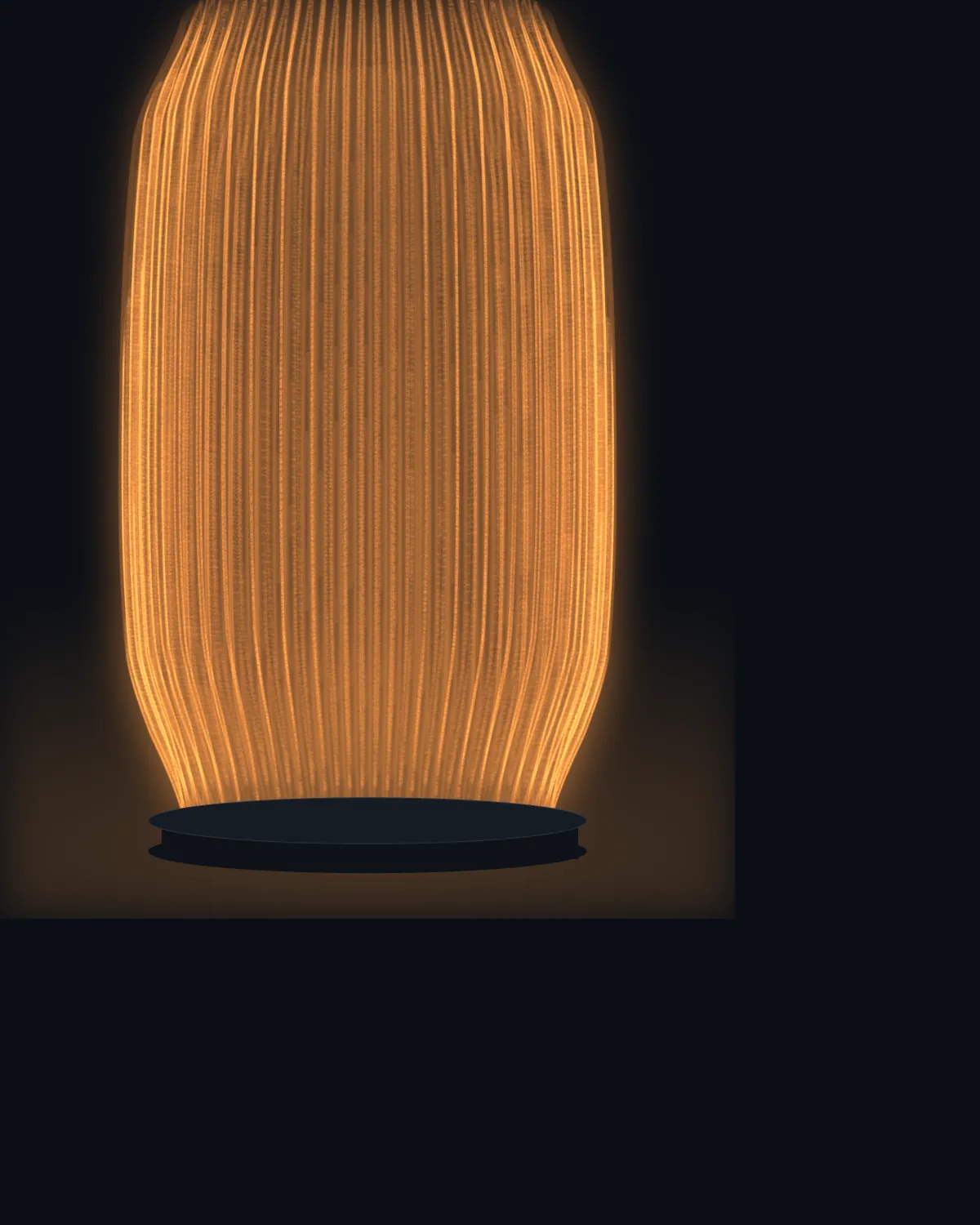
RIMFROST printed in BJÖRK
BJÖRK birch 58 % · 3000 K

The palest and the brightest. Reads almost white unlit; the light comes through nearly uncoloured.
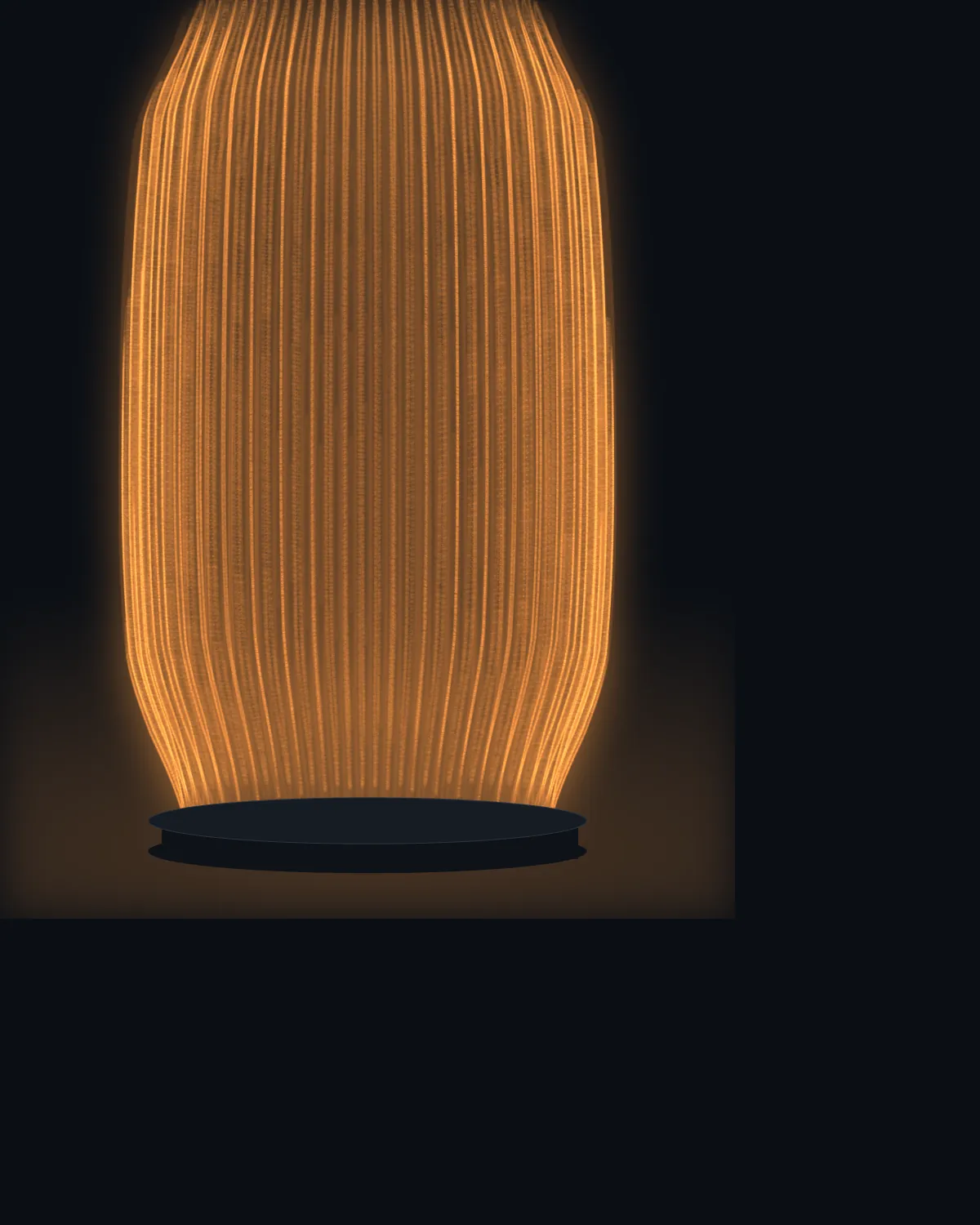
RIMFROST printed in GRAN
GRAN spruce 44 % · 2700 K

The house default. 2700 K, the colour of a filament lamp, and the starting point for SPIRA.
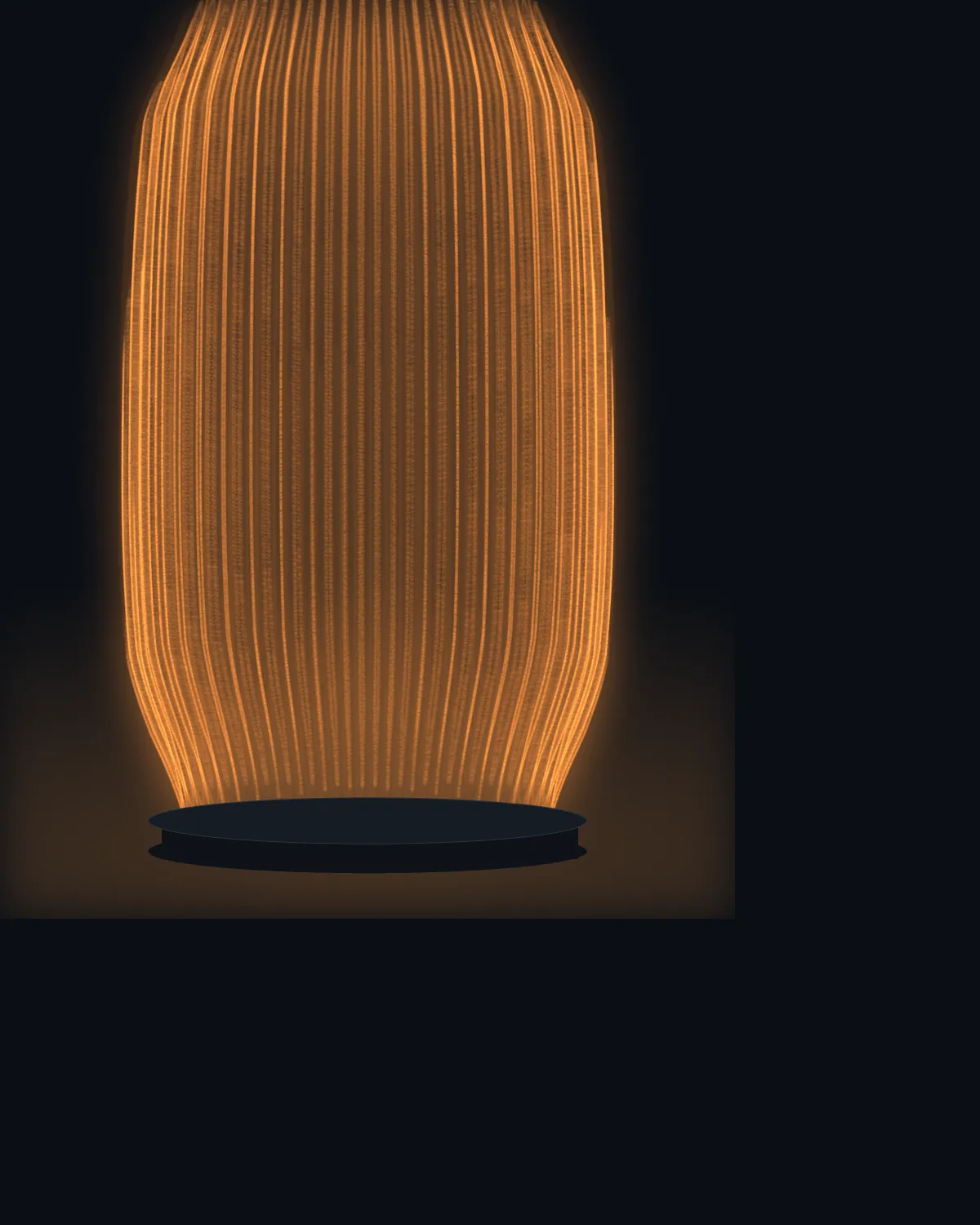
RIMFROST printed in TALL
TALL pine 31 % · 2400 K

Amber. Half the light of BJÖRK and twice the evening. The flutes read as hard shadow.
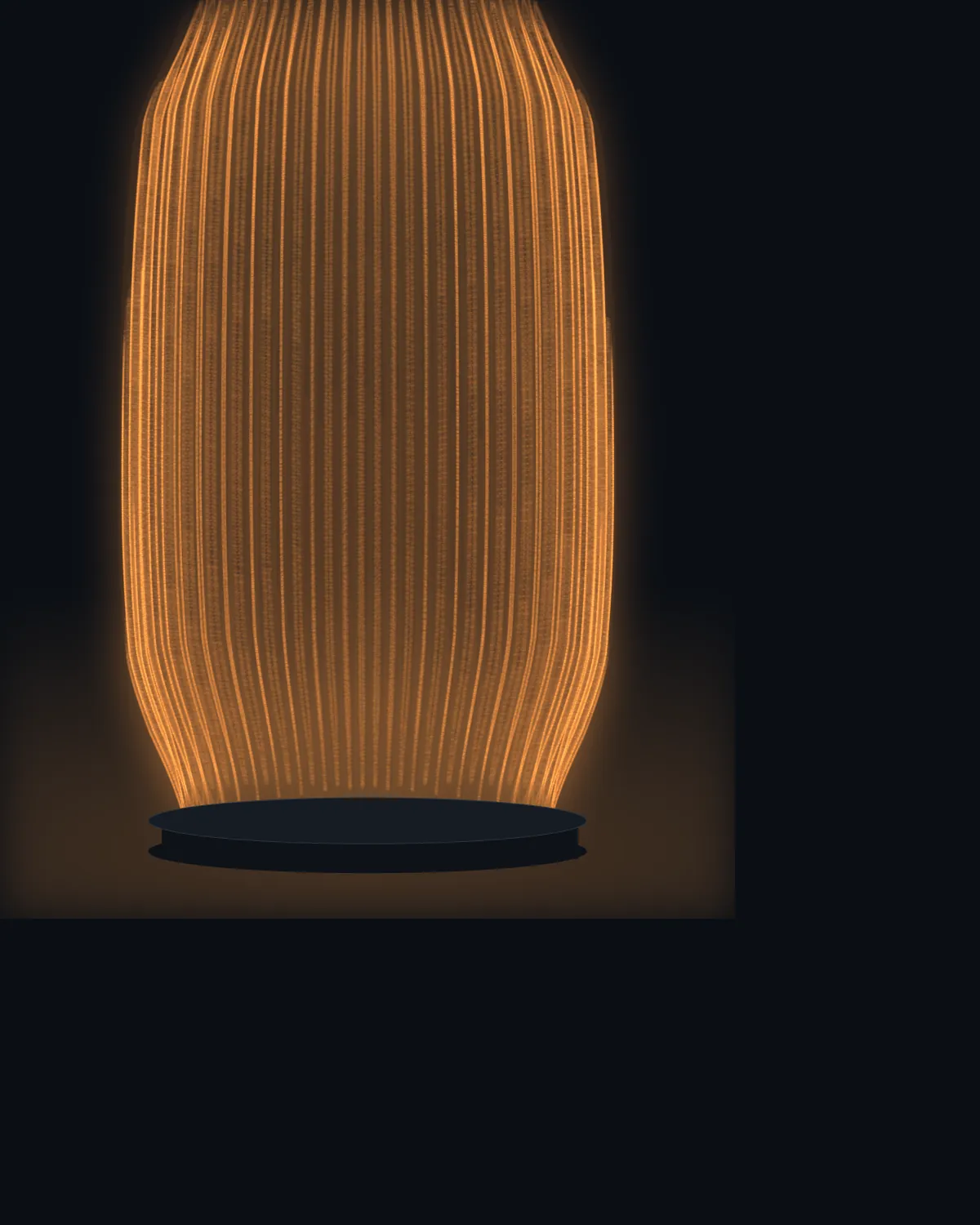
RIMFROST printed in ASP
ASP aspen 26 % · 2200 K

Grey-warm and deliberately dim. Specified for bedrooms and for the last hour.

All four are RIMFROST: same geometry, same camera, same dial position. The only variable is the grade. KOL is opaque and is never a shade — it is the caps, the roses, the bases and the stems.
Twenty-two per cent, and it took two years

Wood flour in filament is not new and it is mostly a colour trick: sawdust large enough to see is large enough to block a nozzle, so the fraction stays low and the light behaves exactly as it would without it. Microfibrillated cellulose is a different material — fibres a few nanometres across, which is the right order of magnitude to scatter visible light rather than absorb it.

Twenty-two per cent is as much as we can put in and still push it through a 0.8 mm nozzle for fourteen hours without a stoppage. Marit will tell you the second half of that sentence is the part that took two years.

It has consequences you should know about before you buy one. The material softens at 62 °C, so a shade does not go in a car in July or above a halogen fitting. It is not UV-stable outdoors for years, which is why only SKYMNING is rated for it. And it browns very slightly over about a decade, in a way most people do not notice until they put a new shade next to an old one.

Bio-polymer
BasPLA, polymeriserad ur nordisk sockerbetsmjölksyra
Fyllnad22 % mikrofibrillerad grancellulosa, Västerbotten
Mjukgörare10 %, biobaserad
Densitet1.243 g/cm³
Glasövergång62 °C
Trådjocklek1.75 mm ± 0.02
Färgsättningingen — kulören är träfraktionen
BrandklassUL94 HB
Återvinninggranuleras och trycks om; se Återbruk
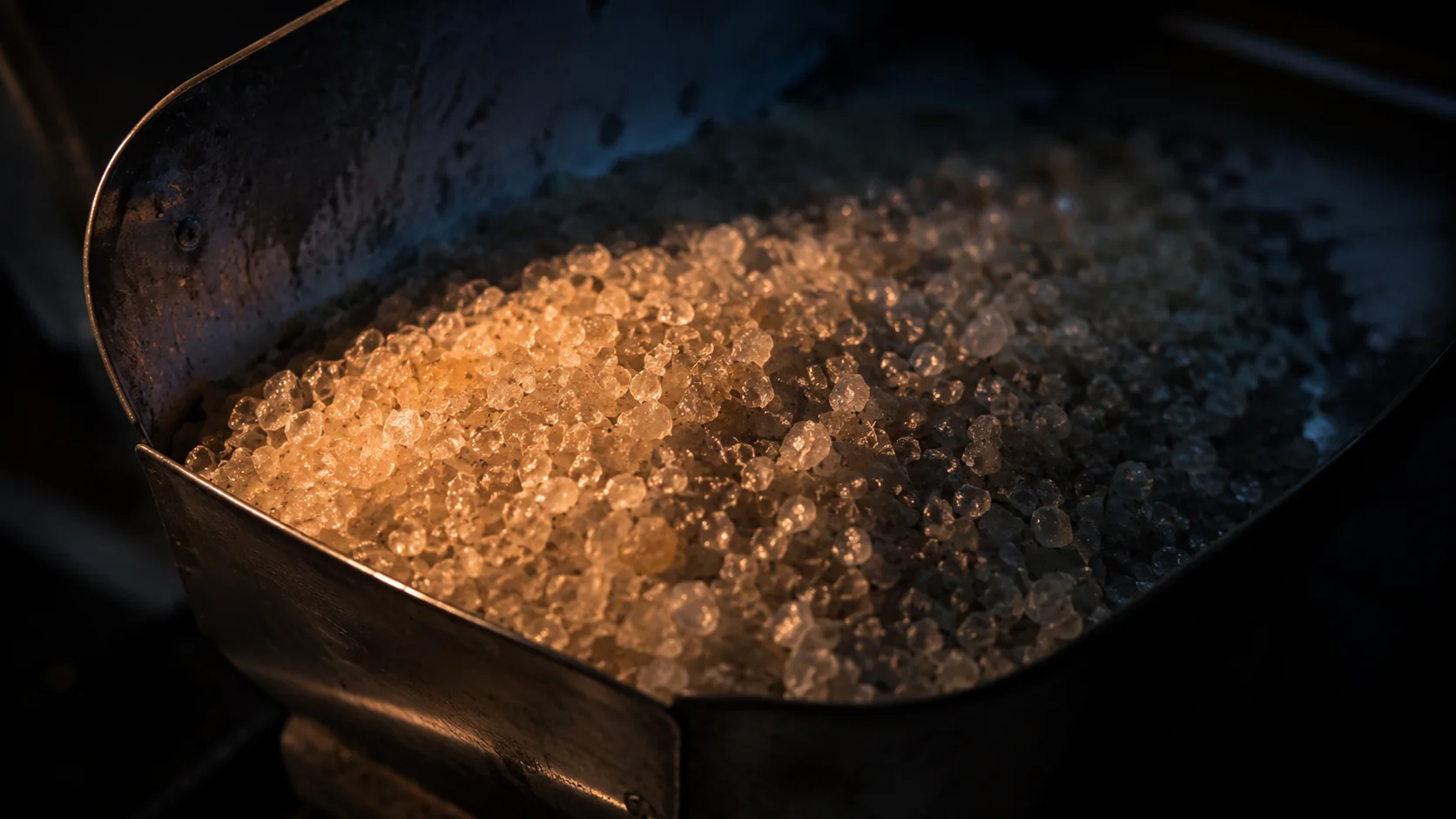
Granulate in a hopper at the works in Sävar
Granulate before drying. Two hours at 55 °C, always, whatever the delivery note says.

Choosing the grade is choosing the light

A shade in TALL is not a shade in BJÖRK with a filter over it. It passes 31 % of the light instead of 58 %, at 2400 K instead of 3000, and the flutes read as hard shadow rather than soft gradient. The same lamp, in the same room, at the same dial position, is a different piece of furniture.

If you are lighting a room, take BJÖRK or GRAN. If you are lighting an evening, take TALL or ASP and expect to want a second lamp somewhere else.

The module and the numbers